
Accessibility in web design refers to the process of making a website and its content available to everyone, including people with visual and mobility impairments. The introduction of the Equality Act 2011 made it law that websites need to have features incorporated into the design to enable access for people with a wide range of disabilities. Making sure they are not put at a “substantial disadvantage” compared to non-disabled users.
The areas that need to be covered are:
- language – this needs to be clear, simple and easy to understand
- motor – options for making it easier for people with difficulties using a keyboard and mouse
- visual – ability to change the colour palette, contrast, type size and alternative text for images
- hearing – subtitles, transcripts and sign language
The official BBC website is a great example of an accessible website design and includes an option for ‘accessibility help’ at the bottom of each page. The screenshot below shows the different options available for users covering the four areas required.

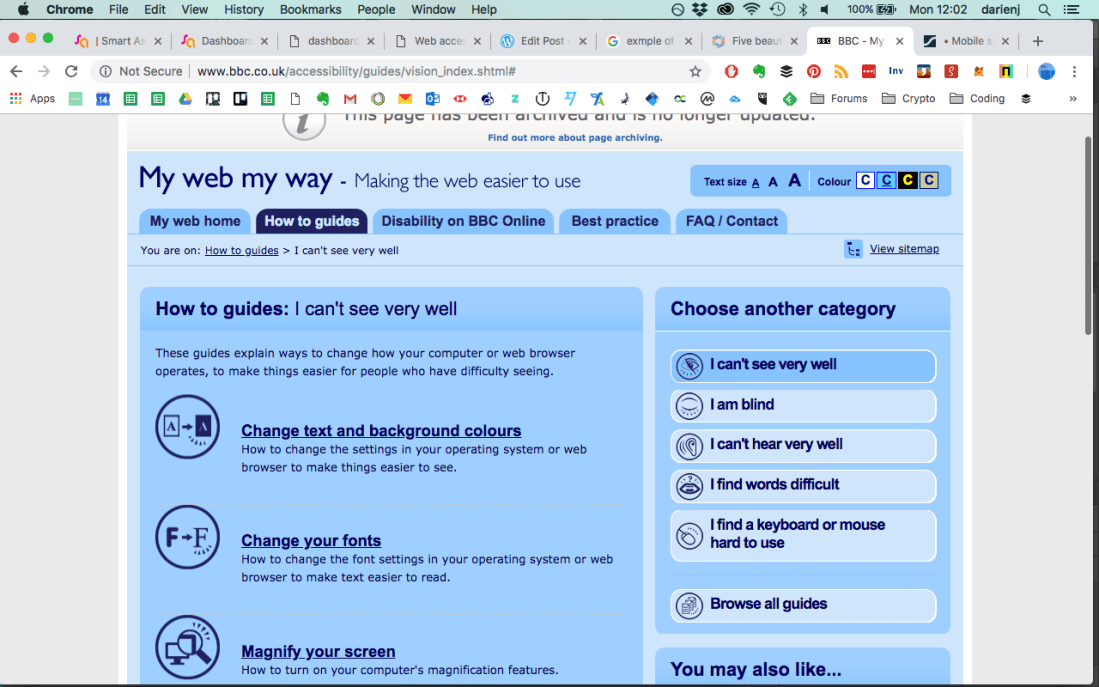
Users who have difficulty with language are presented with a variety of options that would make it easier for them. Including the ability to change the font settings to make the content easier to read, make the text larger or how to use text-to-speech readers.

In addition to options for changing font settings and how to use text-to-speech features people with eyesight impairments are also offered help with magnifying the screen and increasing the size of the mouse pointer.

The ability to change the text colour is also available for those with eyesight impairments such as colour blindness.
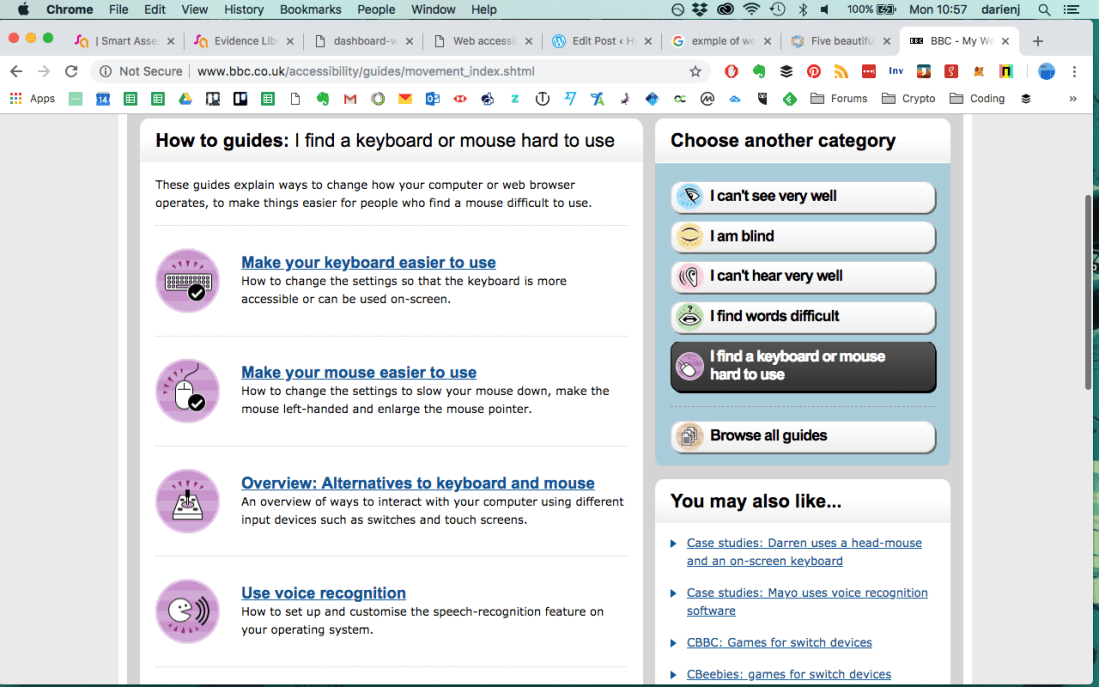
Options for people with mobility issues are also extensive. These include help with making a keyboard and mouse easier to use, an overview of alternative input devices and how to use speech-recognition systems on different operating systems.
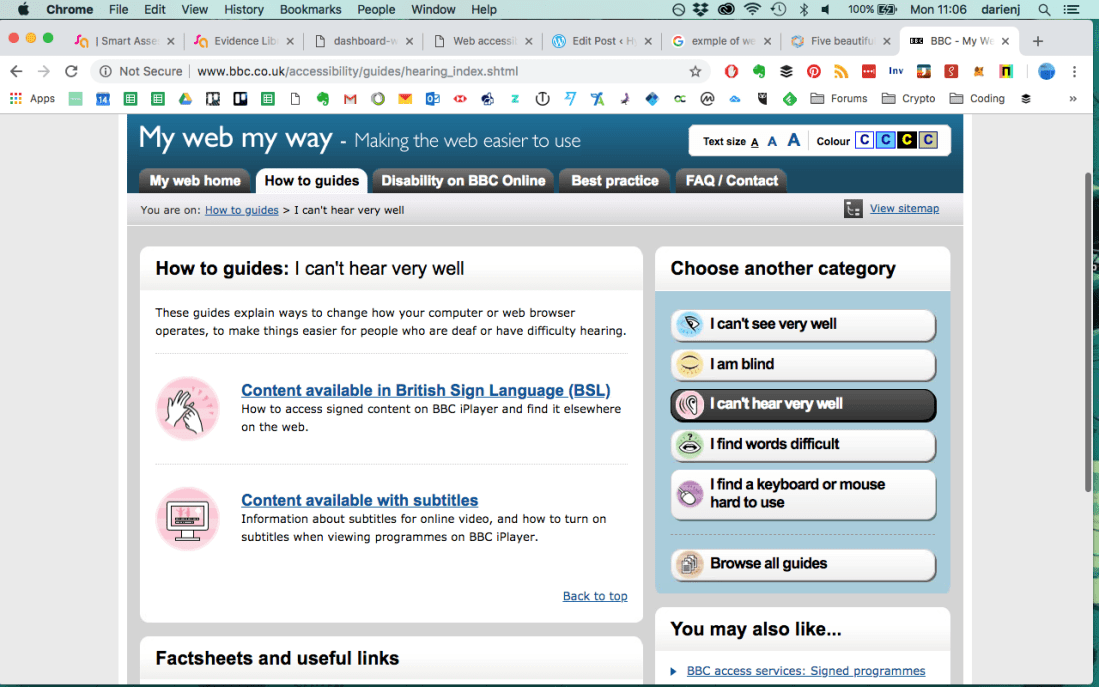
People with hearing disabilities are given options to convert content into sign language and how to turn on subtitles.
According to the Statista website 52.2% of website traffic in 2018 was from mobile devices so accessibility is increasingly important when websites are viewed on devices other than desktop computers. This is known as ‘responsive’ design and ensures websites can be viewed on a variety of devices such as mobile phones, tablets, desktops or any device connected to the internet.
Accessibility Plan for My Website
When designing the website for my radio show it is going to be important that all content is accessible. There will be a number of links to audio files and lot of visual content so the following will be taken into account:
Language – this will be need to be clear and simple so everyone is able to read the content and navigate around the site with ease
Colour – strong contrasting colours so the different sections of each page are clearly visible
Images – the links to audio files will be accompanied by large and clear images so they can be easily identified and include alternative text
Responsive – the emphasis on audio content will add importance to the ability to use the website on mobile devices so a fluid design that works on all devices will be needed











 Wordpress
 Mailchimp
 Canva
Canva Buffer
 Unsplash
 Hypogeal Music